The Ultimate Skillet Ground Beef Bolognese: Simple, Rich, and Weeknight-Friendly

Why Ground Beef Belongs at the Heart of Weeknight Cooking
Ground beef is one of the most versatile, reliable, and accessible ingredients in home cooking. Whether you are building a hearty weeknight dinner or preparing batch meals for a busy week ahead, understanding how to handle beef effectively can turn everyday dinners into extraordinary meals. While there are thousands of ground beef recipes out there—from classic tacos and juicy burgers to comforting casseroles—mastering a rich, flavorful skillet Bolognese sauce is perhaps the single best skill you can build.
This detailed guide walks you through the fundamentals of selecting the best beef, mastering Maillard caramelization, and balancing complex savory flavors. You’ll learn why temperature control matters, how to choose the right fat ratio, and how to execute a restaurant-worthy meat sauce right in your own kitchen.




Key Takeaways for Cooking Ground Beef
- Choose the Right Blend: An 80/20 or 85/15 lean-to-fat ratio provides optimal juiciness and rich beefy taste without excessive liquid runoff.
- Browning is Flavor: Let the beef sit undisturbed in a piping hot skillet to form a golden brown crust before breaking it into pieces.
- Build Layers Early: Aromatics like onions, carrots, celery, and garlic absorb beef drippings, creating a deep savory base.
- Balance Acid and Cream: Adding a splash of milk and a canned tomato base softens the beef tannins, resulting in a silky, rich sauce.
- Simmer Slowly: Even fast ground beef recipes benefit from at least 25 to 30 minutes of low simmering to let the flavors meld together completely.
Understanding Ground Beef Lean-to-Fat Ratios
Before stepping up to the stove, selecting the right package of meat at the grocery store makes a massive difference in the final texture and taste of your dishes. The numbers on the label represent the ratio of lean meat protein to fat.
| Fat Ratio | Common Name | Best Cooking Applications | Flavor Profile & Texture |
|---|---|---|---|
| 70/30 | Ground Beef / Regular | Smash burgers, juicy meatloaf | Extremely juicy, high fat render, high shrinkage |
| 80/20 | Ground Chuck | Meatballs, rich Bolognese, burgers | Ideal balance of deep flavor, tender texture, and moisture |
| 85/15 | Ground Round | Skillet dinners, tacos, pasta bake | Leaner finish, holds shape well, moderate render |
| 90/10+ | Ground Sirloin | Stuffed vegetables, quick stir-fries | Very lean, dry if overcooked, light mouthfeel |
For rich, sauce-based ground beef recipes like our skillet Bolognese, an 80/20 ground chuck is ideal. The fat carries flavor throughout the sauce while rendering into the vegetable foundation, creating a cohesive, mouth-watering consistency.
Recipe Overview: Classic Skillet Ground Beef Bolognese
Traditional Italian ragù Bolognese can simmer on the stovetop for three to four hours. However, this streamlined skillet version captures all the depth, aromatic sweetness, and silky comfort in under an hour. By finely dicing your soffritto (onion, carrot, celery) and using a tube of tomato paste alongside high-quality tomatoes, you extract deep roasted flavors rapidly.
Never overcrowd your pan when browning meat. Stirring constantly turns beef grayish because it steams in its own juices. To build true savory depth, let the meat sit undisturbed against hot metal until a deep brown crust forms before breaking it up.
Ingredients & Detailed Ingredient Notes
- Ground Beef (1.5 lbs): Look for 80/20 ground chuck for optimal flavor and tenderness.
- Olive Oil (1 tablespoon): Used to initiate sautéing the aromatic vegetables.
- Yellow Onion (1 medium): Diced finely to create a sweet, fragrant baseline.
- Carrots (2 medium): Provides natural sweetness that balances the acidity of the tomatoes.
- Celery Stalks (2 medium): Adds earthiness and traditional vegetable backbone to the ragù.
- Garlic (4 cloves): Freshly minced garlic brings aromatic warmth; avoid pre-minced jarred versions for best taste.
- Tomato Paste (2 tablespoons): Caramelizing tomato paste in fat unleashes deep umami flavors.
- Dry Red Wine (1 cup): A Cabernet Sauvignon or Chianti deglazes the skillet, lifting caramelized bits off the pan bottom. (Beef broth can be substituted).
- Crushed San Marzano Tomatoes (28 oz can): Sweet, low-acidity Italian plum tomatoes produce a velvety sauce consistency.
- Whole Milk (1/2 cup): Tenderizes the beef fibers and mellows tomato acidity, yielding an authentic, silky finish.
- Dried Oregano (1 teaspoon): Adds a subtle herbal note that complements the meat.
- Bay Leaf (1 leaf): Infuses a gentle woody depth as the sauce simmers gently.
- Kosher Salt (1 teaspoon) & Black Pepper (1/2 teaspoon): Essential seasonings for bringing out natural flavors. Adjust to taste.
- Rigatoni or Pappardelle Pasta (1 lb): Thick, ridged pasta shapes hold rich ground beef sauces exceptionally well.
- Fresh Parmesan Cheese (1/2 cup): Freshly grated over the hot pasta to bind sauce and add salty finish.
- Fresh Basil Leaves: Picked right before serving for a pop of fresh brightness.
Step-by-Step Cooking Instructions
1. Sear and Brown the Ground Beef
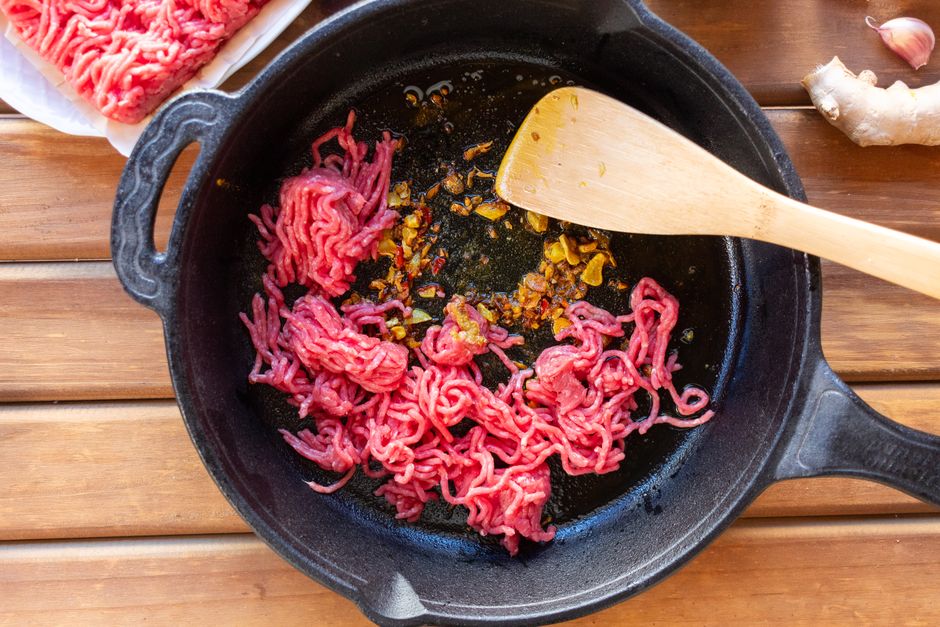
Heat a wide, heavy-bottomed skillet or Dutch oven over medium-high heat. Add the olive oil. Once hot, add the ground beef in large clumps rather than breaking it apart immediately. Season with half of the kosher salt and black pepper.
Allow the beef to cook completely undisturbed for 4 to 5 minutes until a dark, rich brown crust develops underneath. Flip the beef sections over and cook for another 2 to 3 minutes. Now, use a wooden spoon or meat chopper to break the beef into bite-sized crumbles. Once fully browned, transfer the beef to a plate using a slotted spoon, leaving approximately 1 to 2 tablespoons of rendered beef fat in the pan.
2. Build the Vegetable Soffritto Base
Turn the heat down to medium. Add the finely diced yellow onion, carrots, and celery straight into the remaining warm fat. Sauté the mixture for 6 to 8 minutes, stirring regularly, until the vegetables soften and the onions turn translucent.
Add the minced garlic and cooked tomato paste into the center of the skillet. Cook for 2 minutes, constantly stirring, until the tomato paste darkens into a deep mahogany color and smells sweet and fragrant.
3. Deglaze and Build the Sauce Structure
Pour in the dry red wine to deglaze the skillet. Use your wooden spoon to scrape up all the caramelized browned bits (the fond) stuck to the bottom of the pan. Bring the wine to a rapid simmer for 3 to 4 minutes until reduced by half.
Return the browned ground beef and any accumulated juices back into the skillet. Pour in the crushed San Marzano tomatoes, whole milk, dried oregano, and the bay leaf. Stir thoroughly to unify all elements.
4. Gently Simmer to Perfection
Reduce the heat to low, cover the skillet partially with a lid, and let the Bolognese gently simmer for 25 to 30 minutes. Stir occasionally to prevent sticking. As it simmers, the milk will break down the meat proteins, turning the ground beef extraordinarily tender while the sauce thickens into a rich, glossy ragù.
5. Cook Pasta and Combine
While the sauce simmers, bring a large pot of salted water to a rolling boil. Cook your pasta according to package directions until strictly al dente. Reserve 1/2 cup of starchy pasta water before draining the pasta.
Remove the bay leaf from the meat sauce. Taste the sauce and adjust salt and pepper if needed. Toss the hot, drained pasta directly into the meat sauce skillet. Pour in 2 to 3 tablespoons of reserved pasta water and stir vigorously over low heat for 1 to 2 minutes. The starch in the water helps the rich beef sauce cling perfectly to every piece of pasta.
6. Garnish and Serve
Remove from heat. Stir in half of the freshly grated Parmesan cheese. Divide among warm bowls and top with remaining Parmesan and fresh torn basil leaves.
Pro Cooking Tips & Common Mistakes to Avoid
- Avoid Overcrowding: Overcrowding the skillet drops pan temperatures fast, forcing ground beef to steam rather than sear. If doubling the recipe, brown the meat in two separate batches.
- Don’t Drain All Fat Away: Completely draining rendered beef fat strips away natural richness. Retaining 1 to 2 tablespoons gives your vegetable base massive flavor.
- Always Reserve Pasta Water: Never dump all your pasta cooking water down the drain. The salty, starchy water acts as an emulsifier that binds fat and liquid into a smooth sauce.
- Chop Vegetables Uniformly: Keep your carrot, celery, and onion fine and uniform so they meld seamlessly into the ground beef texture.
Ingredient Substitutions & Variations
This recipe serves as a master template for endless ground beef recipes and weeknight dinners:
- Poultry Swap: Replace ground beef with ground turkey or chicken. Add 1 extra tablespoon of olive oil to make up for the lower fat content.
- Dairy-Free Option: Omit the whole milk and add an extra 1/2 cup of rich beef broth with a splash of unsweetened coconut cream or almond milk.
- Veggie Boost: Mix finely chopped cremini mushrooms or spinach into the soffritto to add texture and vegetable nutrition.
- Low-Carb / Gluten-Free: Skip conventional wheat pasta and ladle this robust meat sauce over roasted spaghetti squash, zoodles, or creamy polenta.
Serving Suggestions
Pair this hearty skillet meal with light, crisp side dishes to balance the rich savory beef flavor:
- A crisp green garden salad dressed with a bright lemon-shallot vinaigrette.
- Warm, crusty garlic bread for wiping your bowl clean.
- Roasted broccolini or garlic green beans drizzled with extra virgin olive oil.
Storage, Freezing, and Reheating Instructions
Ground beef recipes are famous for tasting even better the next day as sauce ingredients continue to meld in the refrigerator.
- Refrigeration: Transfer leftovers into airtight containers within two hours of cooking. Store in the fridge for up to 4 days.
- Freezing: Bolognese sauce freezes exceptionally well. Cool the sauce completely, transfer into freezer-safe containers or ziplock bags, leaving an inch of headspace. Freeze for up to 3 months. Thaw overnight in the refrigerator.
- Reheating: Reheat sauce in a saucepan over medium-low heat, stirring occasionally. Add a splash of water or beef broth if the sauce has thickened up in the fridge.
Estimated Nutritional Profile
The following estimated nutrition values are based on 1 serving (approx. 1/6th of total recipe cooked with whole wheat pasta and ground chuck 80/20):
| Nutrient | Amount Per Serving |
|---|---|
| Calories | Approx. 520 kcal |
| Total Fat | 22 g |
| Saturated Fat | 8 g |
| Trans Fat | 0.5 g |
| Cholesterol | 75 mg |
| Sodium | 620 mg |
| Total Carbohydrates | 54 g |
| Dietary Fiber | 5 g |
| Sugars | 7 g |
| Protein | 28 g |
Frequently Asked Questions About Ground Beef Recipes
How do I brown ground beef without it boiling or steaming?
Make sure your skillet is fully preheated before adding the beef, and do not overcrowd the pan. Cooking on high heat in a broad skillet allows moisture to evaporate rapidly, allowing fat to brown the meat instead of boiling it in trapped water.
Can I freeze homemade Bolognese sauce made with ground beef?
Yes, cooked ground beef sauce freezes wonderfully. For best results, freeze the sauce separately from the pasta. Allow the sauce to cool completely before sealing in airtight freezer containers for up to 3 months.
Should I drain the fat when making ground beef recipes?
You do not need to drain all the rendered fat, especially if using 80/20 or 85/15 ground beef. Leaving 1 to 2 tablespoons of rendered fat in the pan adds rich depth when cooking aromatic vegetables like onions and garlic.
What is the best fat content for ground beef recipes?
For sauces, meatballs, and burgers, 80/20 ground chuck offers the best compromise between moisture retention, rich beef flavor, and tenderness. Leaner cuts like 90/10 work best for stuffed vegetables where you want minimal shrinkage.
How can I stretch ground beef to make recipes go further?
Bulk up ground beef dishes naturally by mixing finely chopped mushrooms, cooked lentils, diced zucchini, or finely grated carrots directly into the meat mixture. This increases dietary fiber and volume while keeping dinners budget-friendly.
How long does cooked ground beef last in the fridge?
When stored properly in sealed airtight containers, cooked ground beef dishes remain fresh and safe in the refrigerator for 3 to 4 days.
Conclusion
Mastering basic ground beef recipes gives you the ultimate tool for stress-free weeknight cooking. By understanding fat ratios, giving meat time to brown properly, and building balanced aromatic bases, you can elevate simple ground beef into incredible, comforting dinners that taste like they took all day to simmer. Try this skillet Bolognese tonight, adapt it with your favorite vegetables or herbs, and keep it in your weekly recipe rotation!